

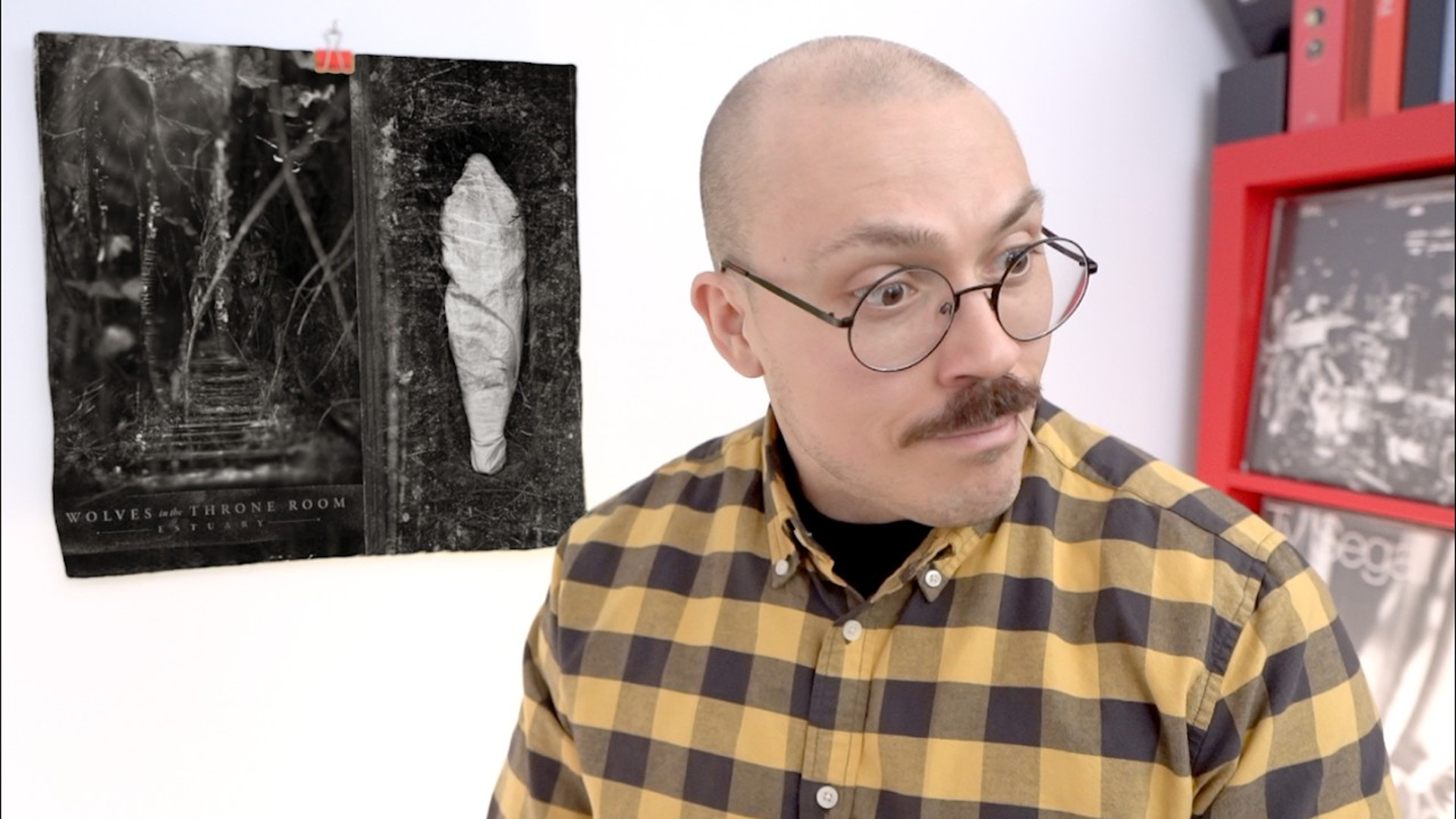
Hi everyone, Norththony Westtano here, the internet's busiest music nerd, and it's time for a review of this new Wolves in the Throne Room album, Estuary.
This is the latest and eighth, I believe, full-length album from pacific northwest black metal titans, Wolves in the Throne Room, who have been a band now for about 25 years at this point, and I've been listening to nearly 20 years myself as my first introduction to their work was the classic Two Hunters back in 2007.
A record that, in my opinion, is really not talked about as much as it should be, especially considering how much of an entry point that album was for black metal among a lot of North American underground music fans at the time, and while Wolves in the Throne Room is far from the first US-based black metal band of note, no American band from what I can remember drew the amount of attention that they were in the late 2000s up until that point. Or at least had the impact they did culturally at the time, given how broad their appeal was outside of black metal circles. The blast beats and wintry atmospheres and harsh vocals you typically would find in this genre were given a little bit of a post-rock twist, with winding builds and structures and huge crescendo points.
And it didn't take long at all for all of this to snowball into this neo-atmospheric black metal resurgence that was rolling out across the internet, and not only was raising the visibility of newcomers, but some established acts, too. So for all the hate and controversy that may have surrounded Wolves in the Throne Room around this time, that, for the most part, has probably been long forgotten, because by many black metal purists they were perceived as not being true black metal, or being hipster black metal, whatever. The band, over the years, has consistently done their own thing, and in some ways even bucked some of the trends they helped start on subsequent records.
2009's Black Cascade, for example, is an album that, in comparison with Two Hunters, is much drier and raw. I feel like, on this one, the band dumped much of that kind of post-metal, post-rock appeal that made Two Hunters pop off in the way that it did. And while I didn't exactly love the album at the time, I've come to appreciate its ferocity much more in retrospect.
But from here, it didn't take the band long to start building things back up, and even getting more abstract. A few years later, Celestial Lineage featured not only choral vocal passages, but lots of electronics and effects, more synths and ambient passages, which also rolled into the distantly related Celestite – was not a black metal album at all, really more of a straight-up drone and dark ambient release.
Which might not have been what a lot of Wolves in the Throne Room fans were looking for at the time, but as someone who really appreciates the more ambient aspects of what the band does, hearing them go fully into this sound to really pinpoint what makes them tick in that way was pretty interesting.
Then, when it comes to this latest era for the band, it's kind of a curious state. With their last full-length LP, the band actually signed on to Relapse Records, which I love, as a very prominent platform in the metal scene is willing to support the band and see value in what they're still doing to this day. And that Relapse debut, 2021's Primordial Arcana, was, arguably, their heaviest and most professional-sounding record to date.
Really kind of upping those DIY recording chops the band is known for, and taking things to a new level with not only lots of clear, rich dungeon synth layers, going toe-to-toe with their very trademark harsh guitars, but then adding in, also, a lot of double bass kicks, as well as folk and acoustic instrumentation for kind of a pagan angle, I suppose. And while you could say the album is their most versatile so far, sonically, I do feel like there was a little bit of mystique lost on this one.
However, I do think they get that back on Estuary. And also, I can't remember the last time I anticipated one of this band's albums this much, and it didn't disappoint.
I will say the lead single from this thing, "Ghosts Among the Obelisks," did have me scratching my head just a little bit, though. Why were the drums so dry? Why did you have these booming percussion sections, and also these clean, deep spoken-word passages? It was different, but the more that I listened to it, the more I came to appreciate how heavy it is.
I also noticed some subtle layers of death metal-style vocals, too. Which led me to realize that deeper into the album, there's actually some pretty noticeable influences from death and doom metal, too. So the band is making music that's very vast and wintry once again, but without necessarily going right back to those post-metal roots that Two Hunters leaned into so hard.
Not to mention, the lyrics on this track also kind of describe exploring the ruins of a lost civilization. And nature kind of overtaking the ruins, which ties into this record's concept of, I guess, fast-forwarding things a thousand years from now to a point where much of humanity has died and civilization as we know it is gone. And again, many of these songs are essentially poetic descriptions of what's left at this point, told from the perspectives of whoever is still there to observe.
Take the title track, for example, where you can see:
"Dark Isthmus of decay / corroded steel / gray wolves make their homes in the wreckage."
Again, all of which tracks, given the band's storied appreciation for all things natural and ecological. But I think this track is also an achievement for Wolves, sonically and compositionally. As they always seem to figure out a way to up the ante a bit, with sinister opening riffs eventually giving way to these righteous tremolo leads. Then the drums pick up the pace with these passages of blast beats and galloping grooves, too. And then, of course, topping things off with the theme melody coming back in kind of a slow, doomy finish.
The rest of the record is five more tracks that top out at 48 minutes. And from here we get "Knights of Tiamat," which is an eight-minute monster, and kind of a change of pace topically, too. You could probably say this is the most sci-fi-themed Wolves in the Throne Room song ever, with mentions of wizards, as well as futuristic technology, which really gel with the space-age synthesizers they pump up to the max on this one. And there's a lot more to love about it, too, like the grim black metal-style intro, the heavier, slower death metal-style passages to follow that really sell me, as well as some exotic chord progressions and melodies that feel like something off of an early Nile or a Neurosis record.
These kinds of chord progressions also make themselves known on "Foretold in Reflections," which not only features these memorable bass lines playing through some minor scale progressions, but also some of the slowest and most haunting sections of any song on this album, too.
The synths, once again, really get pumped up, and you hear these percussion sections that sound like tribal drums getting whacked in huge caves. It's an odyssey of a track at almost ten minutes, and the band packs this runtime with lots of changes. Meanwhile, the lyrics themselves read almost like a ritualistic vision.
Then, from here, the band really starts to turn up the heat with the track, "The Orca Cliffs," which honestly rocks between the pacing of the riffs and drums. The band hasn't sounded this straightforwardly visceral to my ears since their Black Cascade days.
Then, they somehow managed to go even harder on the closing track, which starts off at 100 miles per hour with the pacing of these blast beats and speedily picked tremolo guitars, but the vocals kick things off with what sounds like a demonic laugh. Just this evil cackle starts the whole song, while the lyrics essentially describe this traveling merchant fighting their way through the bitter cold. Bringing these items he bought from a tribe, but honestly, survival does not seem to be in the cards for this guy, as his final words are essentially sort of taken over by this very slow, wintry instrumental passage that kind of feels like a giant blizzard blanketing whatever is left of the relics of this long-gone civilization the album is talking about.
But yeah, with Estuary, I loved this one. Again, it's the most I've enjoyed Wolves, from front to back on an album in a long time. At least, in terms of a straightforward, just black metal release. And it's funny, the lead single, "Ghosts Among the Obelisks," that one ended up being probably one of my least faves. In terms of all of these different influences and sounds gelling together, all the other tracks on the record, to me, felt much more cohesive and exciting to listen to.
And I think this band just continues to be very creative conceptually and just interestingly pull together a record that feels like a true black metal experience, but still weaves in these elements of death metal, weaves in these elements of prog and dungeon synth very effectively. Which is why I'm feeling about a decent eight on this one.
Anthony Fantano. Wolves in the Throne Room. Forever.

What do you think?
Show comments / Leave a comment