
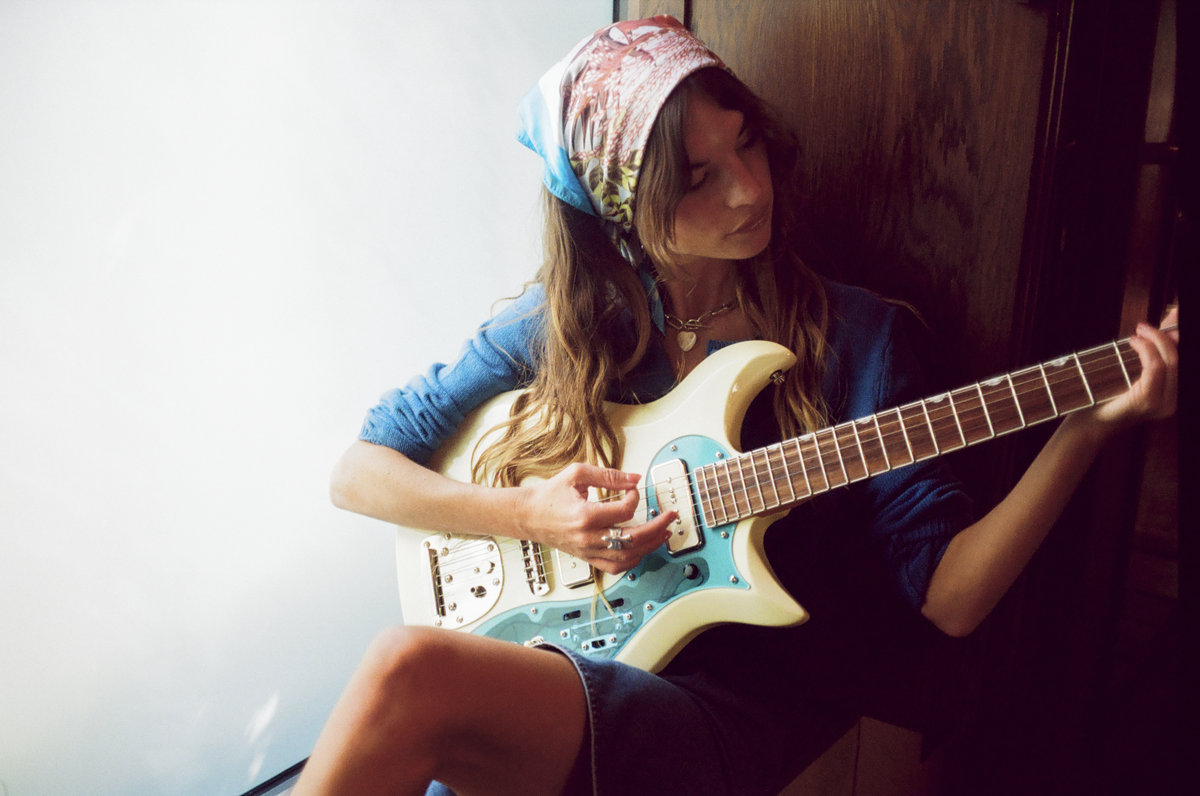
There is nobody responsible for the direction and fabric of pop music in the 2020s quite like Amy Allen. Since breaking through in 2018 with Selena Gomez's "Back To You" and Halsey chart topper "Without Me," Allen has become a go-to collaborator for the biggest names in pop with three more #1 hits under her belt ("Please Please Please," "Manchild," and "drop dead") and back-to-back wins for Songwriter of the Year, Non-Classical at the 2025 and 2026 Grammy awards. As Grammy season approaches, a three-peat is well within reach.
Just this year, her pen has graced five tracks on Olivia Rodrigo's you seem pretty sad for a girl so in love, "Heavy Weight" from Tinashe's critically acclaimed Popstar, and forays into R&B and country working with artists like FLO and Koe Wetzel.
I chatted with Allen on the phone to discuss her perspectives on the importance of storytelling in modern pop, the way the ever-evolving music industry changes the function of her unique trade, and her place in the continued battle for just compensation and labor protections for songwriters.
This interview has been edited for length and clairty.
Leah @ TND: I wanted to just start kind of talking about your job function and how it varies across the different genres that you work in.
Allen: What I love the most about the job is that every day it's so different depending on the artist I'm writing a song for and it kind of varies. It depends on, you know, some days I'll go in and I'll be playing guitar and I'll write the song on guitar. Some days I'll just be singing melodies. Other days I'll be at home, you know, switching it up, doing other things. But I think what I love about my upbringing with music is that I got to be around so many different genres.
Growing up, I started playing bluegrass. That was my first introduction into playing music when I was little. And then my dad kind of raised me on classic rock. So, you know, I got really into Fleetwood Mac and the Stones and Pink Floyd. And then I started my own band in college, so I got really used to writing songs and performing them on stage and understanding what that feels like to have to actually stand up there and sing the words that you've written.
So I feel like it's all kind of like given me a bit of like a toolkit to be able to move through different genres and play different roles in the studio. But it's totally different. I mean, every day, you know, whether I'm writing with a country artist and we're really focused on the story and we are just writing it with a guitar or I'm doing more of like a dance pop thing and the track is a huge component of the storytelling as well. So it's always different.
Do those differences place different expectations on you based on what the format is? How does that show itself?
I think so. I think that for me, my goal for every day, regardless of the genre or the artists or whatever type of song we're trying to do, is just to write a song that tells a great story. I've always been a lyrics person. I just love great storytelling.
Growing up on Dolly Parton, Tom Petty, Bob Dylan, I'm always in it for what human emotion is being explored and told and what I can resonate with. And so I feel like I try to always keep it on that straightened arrow so I don't get pulled too far left or right. There's so many traps you can fall into in songwriting where you focus too much, you overthink it, and so many other things.
So I try to keep my expectations, at least for myself, just to walk out of the room every day having told an honest story.
How often is it that you're going in there with an artist and you're starting completely from scratch, versus the artist already has something to bring to you and you're just there to tighten it up or make it more incisive or succinct?
Most of the time we write from scratch. Most people that love writing songs love writing songs in real time in the room, especially if they like collaborating, which everybody that I work with is such a good friend of mine at this point and we all love collaborating with each other. So it's really fun to just build from scratch.
But of course there's been times when I've brought in something much more developed or the artist has brought in something much more developed and we can hone it and write certain parts together and tweak things. But my preferable method always is to go from scratch and build something together.
Do you think that the kind of uptick in demand for "confessional" songwriting has placed different or greater expectations on you than when you started?
I'm not sure. It feels like it changes. I feel like I've lived through phases of my songwriting career where at the beginning when I was just writing songs by myself in my room before I had moved to LA and signed a publishing deal and everything, I was just so focused on the story. I just was obsessed with writing something that made me feel like how a Stevie Nicks song makes me feel or a Dolly song makes me feel.
I was just wanting to hone my own craft so deeply so that I could write something that makes myself and other people feel something. And then when I kind of got into the flow of session writing with other people, I think that was then a new chapter of being like, "okay, well now I need to learn how to write a story that is honest and true to me and also moving alongside these other cogs in a machine of how we do it together."
That's an ongoing learning thing as a songwriter in general. But now I feel like I'm kind of back to the beginning again where I'm falling back in love with just pure storytelling because I feel like I kind of understand how to navigate and move and work with other people that I love. But it feels like it's a neverending thing for me.
I feel like I learn new things every single time I go to a session and write a different song. And I'm really excited that there's so many new songwriters and artists every day that I hear about and I discover and I get turned on to that are also storytellers to the bone. I think there's just endless inspiration out there from old songs and new. The new blood that's coming in... I think the bar just keeps getting higher and higher. People want to hear honest things that they resonate with. I think that'll always be the case.
Are there any particularly young artists that you've worked with that have maybe allowed you to kind of glean the direction that pop music is going in or that have particularly inspired you?
I think there's so many artists that I get to work with that it's such a blessing that I can collaborate with them, because I think they have the power to really set the flow of where modern music is going, whether it's pop, whether it's country, R&B – it's the artists that we all listen to every day just living in the world, you hear these artists' voices and they're so open to pushing the boundaries and working outside of the lines.
And that's so exciting to me. Getting to be a part of writing songs in pop culture that are then becoming kind of the fabric of what we all are listening to every day and getting to really take chances with that with key changes in songs and all the funny lyrics and the heartbreaking lyrics and really keep pushing the boundaries of what modern songwriting is. I think it's so exciting.
So yeah, the answer is almost every artist I work with, I feel like I have that with.
When you're talking about key changes and these different kind of songwriting tropes, do you have any favorite little tricks or tropes that you like to try to incorporate when you can?
When I was first at school – I went to Berklee College of Music for songwriting for a little bit after I went to nursing school and the other phases of my life – but I remember being in a songwriting class and learning these tricks about, "OK, well, like, the pre-chorus, if you don't hit the highest note of the song, if you hold off to hit the highest note of the song for the chorus, that's what's going to make it feel like a chorus." Or if you don't go to the I chord before the first chord of the chorus, then it's going to really feel like it opens up and there's your chorus.
And I feel like to be a good songwriter, what I strive to do is to unlearn a lot of these things and learn new things. Because it's so funny; I had learned all of that and then I got to L.A. Within two years of living in L.A., the new trend on the radio was the anti-chorus, like a chorus that drops down and almost did like the inverse of what choruses had always kind of done in pop music. And so it was like, you just have to be so adaptable and kind of unlearn a lot of things.
My new trick is to figure out how to not feel like this is the one route to having a chorus feel big and emotional. There's thousands, endless different routes to get there and trying to explore those and not lean on my old trick-of-the-trade things that I've used in the past.
Is there anything from your education that you still really hold as gospel that you've taken with you?
Yeah. I mean, I think the one class that I really still feel like is deeply embedded now into the way that I write songs was this poetry class that I took back at Berkelee that was taught by this teacher Pat Pattinson. And anybody that passes through Berkelee and took songwriting classes knows Pat Pattinson's name because he teaches rhyme scheme in this poetry class in such a profound way.
And we were studying like, Eminem lyrics. And then we were talking about Joni Mitchell songs at the same time and talking about internal rhyme scheme and also really honing in on poetry and writing from the heart. And I just, I learned so many things in that class that I feel are kind of this bedrock of my songwriting now.
And not necessarily like tricks, but just like almost a philosophy of how I like to approach it lyric-first and things that feel good and sound good coming off of the tongue. That was probably my favorite turning point, like a big light bulb moment for me when I took that class.
How do you deal with disagreements in the studio?
I would say the artists that I work the closest with and the producers and the other songwriters that I work the closest with, we actually enjoy getting into disagreement because we have so much respect and love for each other and how we write songs. So when we get into a disagreement, it's almost kind of fun at this point because whichever way the song goes, if one person's fighting for it to go one way and the other's the other way, it's win-win. We're both presenting things that we feel strongly about and we both respect each other.
So I kind of enjoy the disagreements now. It's always a learning thing. too. And then with newer artists that I'm less comfortable with and I have less rapport with, a big lesson I learned early on is that as a songwriter that writes with and for other artists, it is for me to be there. I'm writing, [and] I want to help write their truest, best form of their next favorite song they've ever heard. I want to help them be a part of writing that for themselves. So it's also checking ego at the door as a songwriter all the time because nobody ever knows best all the time.
I am wrong so, so, so, so, so many times about where a song could go and how it could be elevated. I get to learn from people that have been writing songs way longer than me and like way, way, way less time than I have.
It's not like math, there is no right answer ever. So there's always gray area to talk and to debate and to give and to take a little bit.
As you've like grown these more close professional relationships and have become as in demand as you are, what factors go into the decision on what you accept to work on versus what you pass on?
I feel so grateful to be at a place in my career where I've been doing it professionally for almost 10 years now. At the beginning, I was doing doubles almost every day of the week when I first moved to L.A. and when I was back living in New York. And I was just taking anything that would come: doing tons of DJ sessions, which isn't what I'm naturally great at or not what I necessarily listen to in my free time. I was doing all these different genres and just saying yes to everything because I was so excited to even get into the door with anybody and I still feel that way.
I'm still grateful anytime I get asked to work with anybody. But I think now I feel really grateful that I've gotten to a place in my career where I can just be choosing to work on things that really inspire me and allow me to keep falling in love with music and working with people that are some of the best friends I have in the world now, collaborators that I love and I trust and having any song come out with them, even if only our parents hear, we're still happy to have a song come out together because we love working together and it was a memory and we walked into the room and a song didn't exist and we walked out and now a song will exist in the world forever.
So I feel like I just... I love it so much and I'm grateful to just pick things that inspire me and things that make me feel like I'm learning and they push me a little bit. So that's kind of where my head is at now.
And I get to take a little bit more time off now to live and have a little bit more free time where I'm not doing doubles and working on the weekends anymore, and I think that has allowed my songwriting to get better as well to have lived experiences to be writing about.
What are like hallmarks of the kinds of projects that do end up inspiring you? Is it mostly just that aspect of personal narrative?
Yeah, I think it's an artist that has something to say that they really want to say and has something that they believe in, that they want to make a soundtrack to and put into the world. And sometimes, oddly, like, my manager will send me something that I would have never thought would be the right mix for me to jump onto, but then I co-write with that artist, and they turn out being some of my favorite collaborations I've ever done. And those I'm really grateful for too, because you sometimes just never know. Chemistry is such an interesting thing.
There's artists that I've been a huge fan of and we get in the room and not a ton happens and there's artists that I've never heard of and I'm not really sure what I will bring to the table for that artist and their sound. And then I get in there and it's one of my favorite sessions I've ever had. It's so interesting that way and I feel like it just always keeps the door open for me, never closing my mind off to a certain genre or a certain type of artist.
Can you divulge any of the projects that have surprised you in that way?
I think one of my favorite ones that was such a surprise – and him and I both talked about this – there is an artist called Koe Wetzel, and I got asked to fly to Texas and do a week with him at this awesome studio called Sonic Branch. And I'd worked in country, but I'd only worked with women in country. I hadn't really worked a lot with men in the country world, and he was also a little bit more in the rock-country genre, I would say.
I just wasn't exactly sure how I was going to fit into the project or how I would be utilized in the setting of the collaboration process, but the second I got there he was so open and so awesome to collaborate with and work with and he was so inspiring. He just had the x-factor that every songwriter would hope to find in an artist where they're just bubbling with things to say. We just got on like a house on fire, and I got to be there with this other producer, Gabe Simon, and my really good now-friend, Carrie Carpenter. We hadn't met before, any of us, before we got there and one of the songs that we wrote with Koe ended up being my first country number one that I was ever a part of, so that was such a funny process and exciting because I don't know if he would have necessarily ever picked me to work with [on his own], and we just kind of got paired together, and it was such a fun new experience for me to be a part of it. I loved it.
You mentioned how you really hadn't worked with many men specifically in country. Is there a kind of connection that you're able to forge with your female collaborators that just isn't really possible to forge with male artists?
It's hard to say. I think it really just depends on the person. There are so many male artists that feel like brothers to me and I absolutely adore and I think it just so happens that I work with more women because it's kind of like having a best girlfriend.
There's just things that we can understand and talk about and joke about and we have an innate understanding of each other that I think lends itself to songwriting and the intimacy of songwriting really well. I also have two sisters so I'm just really comfortable talking about feelings with other women. But like I said, it's so dependent on the person. I also have male artists that I feel that exact same way with and I feel so grateful to work with so many artists that are so vulnerable and open and willing to talk about hard things.
You said in your Grammy acceptance speech last year, "To the labels out there, songwriters should always be receiving points." Obviously, I'm sure you can't give specific examples, but what does that fight typically look like for songwriters like yourself?
I mean, it's an evolving fight. As a songwriter, [there are] many things you don't even know to ask for. You just get told time and time and time and time again, "It's the industry standard, nobody's budging, you're gonna lose the job if you push for that," and I think for as long as songwriters have been in existence, we have always kind of fallen to the bottom of the food chain. Producers have always kind of been at the top of the food chain where you get points on the master and you get equal splits on publishing as songwriters do even if you aren't necessarily like doing any writing of melody or lyrics or chords, you just get an equal split if you're in the room and that is not at all the case the other way around. If songwriters are there doing all the vocal production and playing parts on different instruments and coming up with little lead melody lines, so many of us have never gotten any type of production credit for doing that. You're placed in the box of songwriter; you don't get to cross over.
So it's been the past few years of an exciting new fight where my friend Ross Golan, who has the podcast And The Writer Is..., is really vocal about songwriters' rights in this fight to at least get songwriters compensated more fairly. There are so many layers of places where songwriters' rights could be improved upon. And I'm excited to feel like I'm at the forefront of pushing for those alongside people like Ross, and try to like ensure that there's generations more of songwriters that can be there soundtracking everybody's lives because as it stands right now, it's really hard for so many songwriters to make ends meet.
What is something you like and/or dislike about the way the pop music industry has changed since you started out?
I think the whole social media of it all, I like and I dislike. I think it's a really exciting tool that you don't need to just be found in a cafe playing by some A&R at a label that then signs you. Now you can just upload your music and people can hear it. I've written with so many artists that were found just by playing their guitar for 30 seconds on TikTok and it going viral and they're great songwriters and now they have a career and it's amazing, but I think also the thing I don't love about that is how I feel like music just keeps getting consumed in shorter and shorter and shorter increments.
I grew up listening to double albums in full and loving the journey of listening to an album starting from the beginning and the art of that artist crafting how you move from each song to the next. Obviously it goes without saying, but we're just consuming things in shorter and shorter and shorter form now.
So, I mean, I guess that's a positive and a negative.
Are you tapped into the indie landscape at all? Are there things in that world that you pay attention to?
Definitely. You mean, like, independent artists that I come across and work with?
Not even necessarily that you work with, but that just interests you, inspire you.
Oh my gosh, yes, definitely. I actually kind of predominantly listen to indie music that I find that is so off the radar that inspires me and then, like, really old music. I've said it in many interviews, but I actually try not to listen to current pop music because I find, as a songwriter, if I'm putting that into my brain all the time, I start to spit out things that sound like what's on the radio already right now.
And that's not helpful or exciting to anyone. So, I tend to listen to really old things or just really left of center new artists that are so far away from music that I'm making that really inspire me, being like, "oh my god, that's so interesting how there is no song form to that song whatsoever." Things that are left and weird and fun and exciting to me.
Who are some of those left of center artists that you're, that you're really into?
I remember the first time I heard Alex G, I was so excited by what he was doing. And then the first time I heard Adrianne Lenker's solo project, I just loved how every song is in a different open tuning, which is really hard to do live because you have to constantly be tuning your guitar to different things or have, like, nine different guitars up there with you. We don't hear a ton of weird open tunings in regular pop music that we're hearing on the radio every day. It allowed me to take this whole new exploration route of trying to write kind of big pop anthemic choruses over very strange tunings that I'd never tried before. Yeah, things like that.
I'm a hobby guitarist and I find myself gravitating to her music a lot because those tunings are so fun to play in, too.
I was in London, I don't know when it would have been – about three years ago, maybe. I go to London a lot, and I just had a lot of alone time in London after my sessions and I made it my mission – [Lenker] has this YouTube video where she runs through every open tuning that she uses. And I just watched it over and over and over again, and then I taught myself how to play "not a lot just forever," which is one of my favorite songs ever. I just think it's one of the most beautifully written songs, and the tuning on that is so beautiful and learning how to play it was so satisfying. It's pretty intricate and also just beautiful when you get it right.
Yeah, for sure. A lot of those plucking patterns are very rewarding to get down to muscle memory. The last thing I have is the visual aid. I was originally not even going to ask about this, but [Allen's publicist] encouraged me.
Publicist: I think it's funny. I don't know that this would even be on your radar, though, maybe.
Have you seen this video?
@whyyougotttalieeeeeeeee She was getting into it 🤣🔥#viralvideos #funny #dance #dancevideo #subway #subwayworker #afterhours #worklife #viral #fyp #meme #turnt #closingshift #halsey #halseyfan
♬ Yacht Club - MusicBox
I'm scared. I'm terrified, actually.... "Girl at Subway Lit As Fuck." What is this?
Publicist: In the background, your Halsey song is playing.
Oh my god, "Without Me"? Yes. Iconic. I love Girl at Subway Lit As Fuck.

What do you think?
Show comments / Leave a comment