
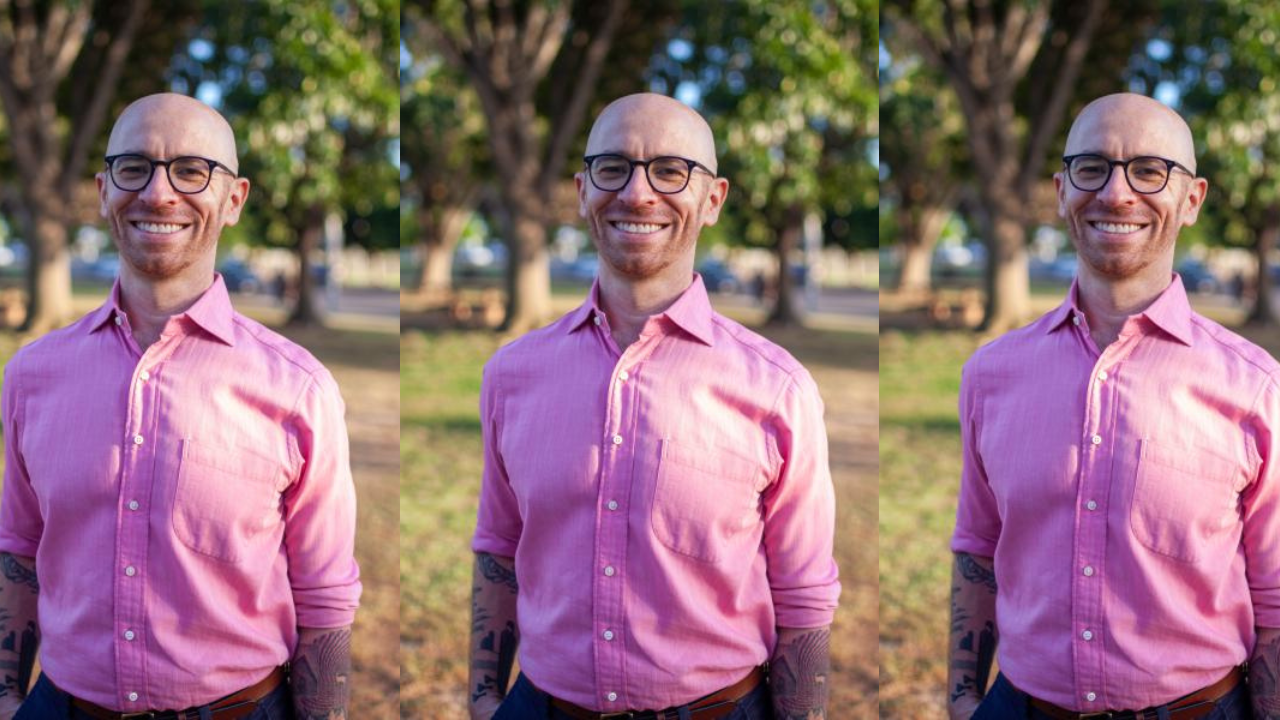
Ian Cohen has been a fixture in the music-writing world for over twenty years. He’s been a writer at Pitchfork since 2007, and has helped bring greater critical attention to emo and the bands that shaped it. He’s also written for dozens of other outlets, including Stereogum, SPIN, and The Ringer, to name a few.
Based in San Diego, California, Ian somehow balances his music writing with his 9-to-5 as a registered dietitian, while also co-hosting the weekly Indiecast podcast alongside fellow music critic Steven Hyden.
Ian is currently working on his debut book, which is, appropriately enough, about emo music. We get into the book’s premise, some of the bands featured, and how he approaches documenting a genre that’s spent decades being both celebrated and written off. Naturally, we cover some non-music topics, too, as I lose focus toward the end of the interview and we veer into ice cream, SeaWorld's rap concert series, and, of course, The Simpsons. Enjoy.
This interview has been edited for length and clarity.
Ricky @ TND: When and how did you get into music journalism, being a music critic, and getting in at Pitchfork?
Ian Cohen: Hmm. All right, so I would say my first actual written piece of music criticism was probably in the school newspaper. This might have been '94, so I would probably have been like 14 or whatever. And that was either a review of 311's Blue Album or the first Presidents of the United States of America album.
And, you know, what drove me to that particular format is I would read Rolling Stone, particularly the album reviews. And I would love for a child psychologist to write out what about that format resonated with me. But this is 1994. Opinions were a little harder to come by, and what Rolling Stone or Spin or what have you said about a record was more or less gospel. I think I was fascinated by how that would supplement what I was hearing on the radio, what I was hearing, what I was seeing on MTV. And it just became something I would scour for as a way to find new music or to confirm or contradict what I thought based on what I heard.
It was something I just continued to do. The format made sense to me. From that point forward, I did college newspaper or whatever you want to call it, the alt-weekly at the college, you know, the one where they let you use curse words.
At that point, in 2002, I graduated from college. And, um, and forgive me if I'm being all over the place. But, you know, when I talk with Steve Hayden, he went from college to working at the Appleton newspaper or the alt-weekly. Some of these places were still around in the early 2000s. He went and did that and ate shit for a couple of years. But he was still doing writing. He was covering all of that stuff for those papers. And no one had really told me or showed me how to do that. When I was in college, if someone had showed me that that was a path, I would have done that probably.
But from 2002 to, let's say, 2004, I just didn't write at all. I didn't know about blogs. I didn't know about message boards or whatever. I read Pitchfork at that time, but I figured them, or any other publication, it was like Stonecutters-type stuff. Like, you need to know somebody or save their lives.
I may have, like, submitted a review for Pitchfork when they did their April Fool's Day, where they reviewed Alanis Morrissette or something like that. I'm like, "Oh, okay, like, this is maybe something I could do."
In 2004, I make the leap. I start blogging while I'm in law school, not even album reviews, just like going off on whatever. And through that, I met a lot of the people, you know, of similar mindsets. People who wrote about college football, but also Dipset. People who love Death Cab for Cutie and read Pitchfork and would argue about Death Cab for Cutie at Pitchfork.
I met a lot of the people with whom I still interact to this very day. That was 2003 through 2005. Such a beautiful time. While I was in law school, not really, you know, realizing that that's not really what I wanted to do with my life, but it was a job. You know, writing was not something you made money from, it was just fun.
And, you know, the first place I got in on was Stylus Magazine. Um, this one's for the heads. It was, if not a competitor of Pitchfork, it was kind of like, you know, operating on a similar wavelength. A lot of the people who started out there have gone on to really great careers. And once that publication had folded in 2007, the head of that place put a feeler out to who was, I guess he would have been, the editor of Pitchfork at the time. It's like, "Hey, would you be interested in maybe giving some of these guys a shot?"
And at that point I'd written so much, I'd talked so much shit about Pitchfork and so forth. But that's only because, you know, I wanted it badly, right? And so, once I got the opportunity to do it, I hit the ground running and would review anything, like literally anything. The worst, the better.
I mean, I have regrets about kind of starting out just being the hatchet man or whatever, but those reviews were fun and they were fun to write. And no one else would take them. This was 2008, so you wouldn't get the sort of blowback that you would four years later.
I liked writing reviews. I never, at that time, had the ambition to write a book, didn't want to be a novelist. I just really liked writing album reviews, and that was the format that resonated with me.
What is your approach when you're doing an album review? Maybe it's different for some of those head-hunting ones versus ones that you're really into?
Ian: Man, I've written one review in 2026, so I'm a bit rusty. But I've approached it a couple of different ways. There were the incoming calls and then the outgoing calls. For stuff that I wanted to review, I would pitch things if I kind of thought I had an angle on it. It was something I heard or something I was interested in. Back in the beginning, I think a lot of it was, like, confirmation bias. It's like, I want to listen to it, and, no, it's going to be okay, it's great, I got some zingers.
As things went on, I would only pitch things in which I was interested. During the peak of my time at Pitchfork, it was a lot easier because it would just be, I got the promo pile, right? It was very straightforward. It's like, here's the CDs, here's the links, here's the list of stuff that's coming out. You get the upcoming releases from the editor. It's like, okay, this interests me, I want to get a listen to this.
And also, you know, at the time, that was the only thing I was doing, really, was writing. I would go for a walk with it if it was appropriate to listen to, at the gym, do that too. My favorite was to play NCAA Football on PlayStation and listen to it, because, you know, games are typically 30, 40 minutes. It's a good amount of time.
The writing process itself would just be to walk around the block. Just walk around until something happens, write it down. And I would write and just throw stuff out, and then shape it, shape it, shape it, shape it. It's all just, like, put stuff on the page and rewrite and rewrite and rewrite until it makes sense.
You’re writing a book right now on emo, appropriately. It's titled Feeling Neglected? If you could divulge much — is it a history of emo, or is it your personal relationship with emo and how that kind of came about? What is the structure that you're going for with the book?
Ian: Well, I think in order to have gotten my proposal accepted, it had to bring something to the genre that hadn't been done before. Because, perhaps you've noticed, this is a banner time for emo books. You know, Dan Ozzi's isn't explicitly emo, but his book Sellout, and Chris Payne had his book, Where Are Your Boys Tonight?, which was, like, Fall Out Boy and further, right? Emma Garland's got hers coming out in a little while, I think next year, and Andrew Sacher has his book, Emo Revival.
And so the only other really mass-marketed book that existed before that was Andy Greenwald's Nothing Feels Good, which was written in 2003 and really kind of too close to the blast radius, right? The first couple of chapters kind of mash in, you know, going from D.C. to Dashboard Confessional, and the bulk of it is about the internet at the time and really just kind of takes a dim view of most of the stuff I'm writing about.
And so what's missing in all that is the '90s, right? It starts with Diary, ends at Bleed American, and, you know, spills out in other ways. But that's, like, where the bulk of it is, because it's not a book about Midwest emo, but a lot of it is emo from the Midwest, and it's mostly history. It's not oral history. I couldn't do that. But I would say it is history, some degree of criticism. Like, criticism... by that I mean analysis.
And just kind of walking through how this genre, which was more or less Lifetime in '94, how did it become a thing? How did it evolve from Sunny Day Real Estate to what is essentially a power-pop album? And it involves American Football, the Get Up Kids, and how Vagrant changed things. It involves Pedro the Lion and the Christian element of things, Rainer Maria, and, you know, the female presence with the Promise Ring, and Texas Is the Reason, and queer people in the field of that genre.
It's about emo, but it's really kind of more of a look at the '90s and indie rock. What is it about those areas of the country at that time that created this kind of music? It ties it into today, about how this stuff is just such a permanent part of indie rock. Like, how did it get there?
So I would say that maybe the closest thing I was looking for is maybe, like, This Band Could Be Your Life, but with, you know, emo bands. There's biography in there, sure, but it also gets into these other points about major labels. How bands like Mineral and Texas Is the Reason broke up right when they were about to blow up. Like, how bands like Braid and the Promise Ring kind of also broke up on the verge. And, you know, the Midwestern mindset, DIY. So it is a pretty kaleidoscopic work, I would say.
It's not a history lesson, it's not an oral history, and it's not me telling stories about myself or rehashing music criticism.
Sounds really interesting, and I like that it's kind of an approach from a cultural standpoint a little bit and not just, “and then they formed the band and then they put out this album.”
Ian: Yeah, because that shit is boring as hell, man. I wanted it to be a book, not an encyclopedia.
So, you've done a lot of album reviews, and you're working on this book. I heard you reached out to Death Cab to do an interview for the book, correct? Have there been any bands you've reached out to where they're like, "Hey, I really didn't like that review from 2011," and they don't want to talk, or they just ignore the request?
Ian: I mean, there are bands that I've not been able to get in touch with yet, but to your bigger question, like, outside of the book, yeah, there have definitely been times where stuff has come back to bite me. Or just even stuff I've said on Twitter. I've definitely gotten kill fees for things I was supposed to be on, and they're like, yeah, the label didn't like what you said about that band, and they don't think you would do a good job with it. So, you know, at the end of the day, I got paid to not write, so that was, you know, whatever.
But, yeah, there have definitely been... people don't forget. People remember stuff. There are times where, if I'm looking for a record, you know, a promo, or looking to go to a show or something like that, I have to just kind of be up front.
If I had to do it over again, I would probably do a lot less. I don't know, it's tough to say, because, like, on the one hand, you want to be honest as a writer. But I don't really do those types of reviews anymore. I just don't really need that sort of energy. It's the sort of thing that the young and hungry will do, and that's just how the wheel keeps turning.
How is it balancing your nine-to-five, writing the book, and then the weekly pod? You said you've only written one album review so far this year. How do you manage all of that and get into those different mindsets?
Ian: The podcast is a couple of hours on Wednesday, and it's hard to quantify the time, but that doesn't feel like work. I have to bracket out time for it, but to me, it doesn't feel like work. And, you know, having work outside of music, and between that and the book advance, it's allowed me to take a step back and not have to do as many reviews.
I don't feel as connected with music nowadays. Trends or whatever, and there aren't as many places to write for. That's a big piece of it, right? Because in 2025, regretfully, I procrastinated with the book because I would take the thing that would get me $500 now, right? I can table doing the grunt, incomplete work of the book because I want to do this interview and dedicate a week to that, get my $500.
Steve was at Uproxx, I believe, at that time, and they were wanting to do a podcast. He asked if I wanted to do it, and I was like, "Hell yeah." And then the pandemic happened, and it got tabled for a bit. Eventually, it started back up, and in the summer of 2020, our first episode was a ten-year-anniversary thing about Arcade Fire's The Suburbs.
I'd never really done podcasting as a host before. I was excited to do it. I loved working with Steve, and I think we were on the same path. But, you know, I remember telling him, "Dude, man, is it going to be okay if us, two white guys, are going to be doing the podcast? What are people going to say? Is this going to get backlash?" He's like, "Dude, let's just fucking do it." And, you know, he was right. Steve's always right about that sort of thing.
I think I get really in my head about the perception of certain things. I think maybe this is downstream of him being more seasoned and being less associated with Pitchfork and that whole thing, where he just has more of an outside, big-picture perspective. He definitely checks me a lot when I think that the Pitchfork or music-writer Twitter opinion is the majority one.
It was just us finding a format and being experimental in real time. But I don't think the format's really ever changed that much. It's like, what do we want to talk about? Cool, let's do it. We've just known each other for so long that it feels super natural. And that's why I say it doesn't really feel like work.
I mean, yeah, we put effort into making the outline, making sure it flows, and making sure that it isn't just two guys yapping. But when I'm on there, it just feels super natural, and I really hope that gets across to the people who listen to us.
Last year, you guys ended the podcast with UPROXX and then found a new home for it on Amazon. How was that time in between, and has there been any differences with the new home for the pod?
Ian: I think that when the podcast ended, I can speak for myself, and I feel like Steve probably felt that way too, that there was going to come a time when it was going to end, right? Not because we were getting these messages from HQ saying, "You need to bump these numbers." I think towards the end they were trying some things to maybe boost engagement, which, you know, we played ball. I don't think there was a whole lot of meddling happening. But we just kind of knew, with the direction of music journalism as a whole and what had been happening internally with Uproxx, it's like, yeah, our time is probably going to come to an end.
Even before then, we had been discussing what we would do if and when that time came. When it finally happened, it was a bummer, but we kind of went into thinking, should we do Patreon? Should we maybe seek out a host? I think Steve got a couple of incoming calls. I don't think we went out and pitched it. Steve was like, "Hey, this person reached out, this person reached out." And I think that happening pretty quickly gave us a sense of urgency, but also relief, because the beginning of 2026, man, that was a pretty grim time as far as just my feelings about music writing.
The book was happening, and I was focusing on that. But still, Indiecast, I get paid for it, right? And that's a pretty, if not essential, significant part of my income. And the audience was there. My view is like, come on, we're a rounding error to you. It's not worth it to keep that on.
The beginning of 2026 was tough. It's the beginning of the year, it's a duller time. And what I've learned about myself over the past couple of years is that if I'm not writing about music, if I'm not in it, if I'm not on the Pitchfork message boards and pitching albums and so forth, it's fascinating how much music listening falls off for me. I'm not putting in that footwork anymore to find music or listen to it. I think the promise of writing for something, or at least being up to speed, was enough to give me that second or third listen.
Another thing that happened in early 2026 is that my Twitter account got hacked. And I don't know what was going on there. It hasn't posted anything, because the previous time I got hacked on Twitter, it sent a bunch of messages to people in my DMs about buying a PlayStation 5. Nothing of that sort has happened here. But I had to start over with my new Twitter account, which probably has less than 2,000 followers. The other one had like 40,000. So that is another thing where it feels a little defeating.
Also, my job title changed at work, and I had more obligations. So with all those things combined, you know, I worried about what Indiecast was going to look like. Am I going to have something to say, right?
We were starting to have conversations with some places. What I wanted more than anything was to just pick up where we left off with the easiest possible transition. We were thinking about Patreon because people were sending us emails and so forth. We knew the audience was there, but that requires a lot more work on the front end from us.
Steve started his Substack, and that became really successful super quickly. His perspective, and I imagine he'll tell you the same, is that he didn't want to charge people again, you know what I'm saying? Because that's what putting Indiecast on Patreon would require. The ideal situation for us would be to have it be paid for and have us pick up exactly where we left off. And Amazon really did that for us.
We have some fans, not necessarily Jeff Bezos, but, you know, people. A lot of the people we're working with now are people we already knew, people who are fans and get the vision and don't ask us to really change a lot of things. And so Amazon was a no-brainer for us.
The terms are good. They're letting us basically do what we did before. We keep all of our feed, the logo is more or less the same. It was just a hiatus. And I guess the only things that are really different between Uproxx and Amazon are all positive things. Amazon has so many more resources to do the bonus material. Like when I did the interview with Ben Gibbard of Death Cab for Cutie, we didn't do interviews before. It would be kind of difficult to get that into our format.
It's been a really great experience. Plus, putting us up on Times Square, like, that was, yeah... Did it do numbers for us? I don't know, but it's something you can show. They've been really supportive.
Have you hit up the SeaWorld concert series this year at all? I haven't gone, but I've been following along on TikTok, and I saw a mom baby-wearing twerking, and I saw a lady flashing in front of a toddler. So curious if you made it to any of those shows.
Ian: Not this year. I did see Waka Flocka last year. And, I mean, I'm of two minds about this. It's like, hey, it's cool, it's fun, people are having a good time, and then there's kind of a gawking element to it, because, like, the mom and daughter twerking, there's something that makes me a little bit uncomfortable about it.
With Waka, my wife had SeaWorld passes, so we didn't have to pay the full-price ticket. It was just like, hey, we have this available, let's do it. And that was such a strange performance because he was performing not over his backing tracks, but, like, a backing CD of Flockaveli. And it was very unpredictable where he chose to censor himself and where he didn't. Like, is this going to be a clean show? But he's, like, rapping over "Hard in da Paint" with all the curses and so forth.
He did not play some of my favorites. He did not play "Live by the Gun," he did not play "TTG." It was a performance, I guess, but we maybe stayed for, like, 20, 30 minutes, and then after a while, he just started playing other people's songs, like "Not Like Us" or whatever. It was a strange experience, for sure.
@zavi_moss #wakaflocka #seaworld #shamu #fypシ゚ #concert #fyp #viral ♬ original sound - Z A V I
It's a strange concept and a strange venue, for sure.
Ian: Yeah, I don't know how much more legs it's got. You know, you can only book Paul Wall or Bubba Sparxxx so many times.
You're an ice cream guy. You go into the grocery store. What is your Kid A ice cream, and what is your Childish Gambino's Camp ice cream?
Ian: When I get ice cream, I like to go to the actual shop. I like the experience. But I would say the top store-bought brand, McConnell's is really good. The Childish Gambino one, man, I just remember, I don't even know if these exist anymore, but I'm thinking about all the knockoff Halo Tops that existed. Like, Halo Top is its own sort of thing. That, to me, is a front. I've had it before, and if you let it melt enough, it kind of can be okay.
But, yeah, any of the sort of knockoff Halo Tops. I just know this from a scientific perspective: "quote unquote" ice cream that has fiber or protein or whatever, you've got to take so much stuff out to make that work, and then put so much stuff in, and that's typically sugar alcohols. I joke with my patients who eat that stuff, you can't think of a worse thing for your GI than something with a lot of fiber and sugar alcohol. So, yeah, I don't begrudge any of the store-bought ice cream, but I just feel personally affronted by the kind of protein ones.
Shaved ice: underrated or overrated?
Ian: Great question, because, I mean, are we talking about the Japanese kind like you get on Convoy street in San Diego? Because when I think of water ice, growing up in Philadelphia, I mean, I can take it or leave it. But shaved ice, we like to get that quite often when we go to Convoy. We like Sul & Beans. I love the red bean paste. That's always cool. There are some other places where Japanese shaved ice is delicious, with the condensed milk. I would say it's underrated.
Your favorite underrated Simpsons character?
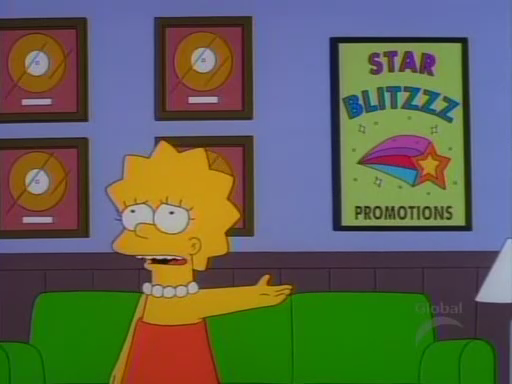
Ian: I love L.T. Smash. Such a quote machine, especially with music-related stuff. Like, "How dare you, how could you soil the good name of Star Blitzzz Promotions?" is one of my favorite lines.
... No, okay, here's my answer. He's not underrated, but I think Superintendent Chalmers, whenever he's on, is such a good return on investment.
For more info on Ian you can follow him on X, Insta, or his Substack.

What do you think?
Show comments / Leave a comment