
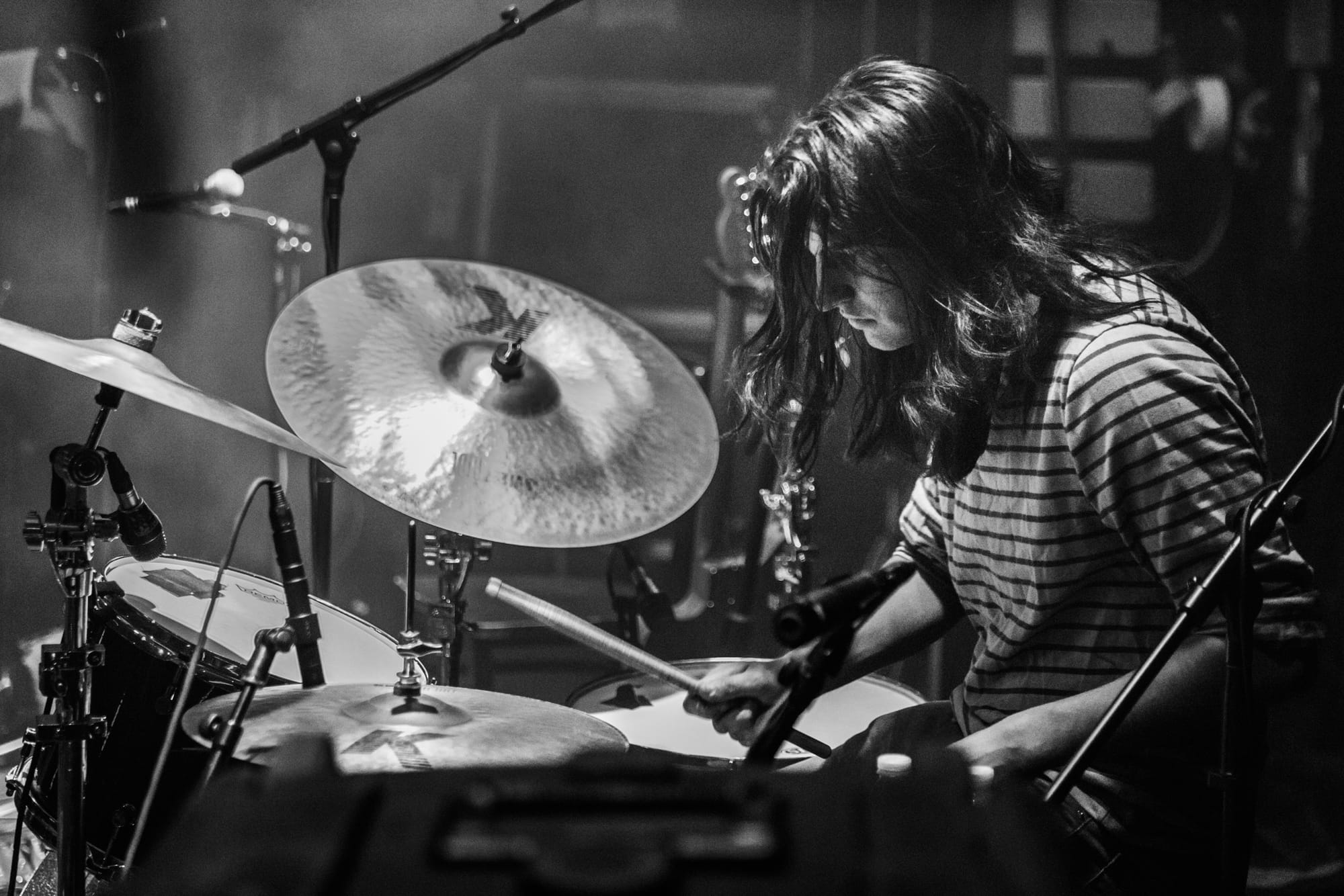
mary in the junkyard are a grounded yet delightfully unconventional group. Their members — Saya Barbaglia (violin/viola/synths/bass), Clari Freeman-Taylor (vocals/guitar/cello), and David Addison (drums) — are not the typical punk fit. They’re reserved, but they are warm and welcoming, and when it comes to talking about their music and lyrics, they light up like fireflies and buzz around for minutes at a time. They speak quietly, but they fry the amps with their music, stomping along to their now-audible heartbeat.
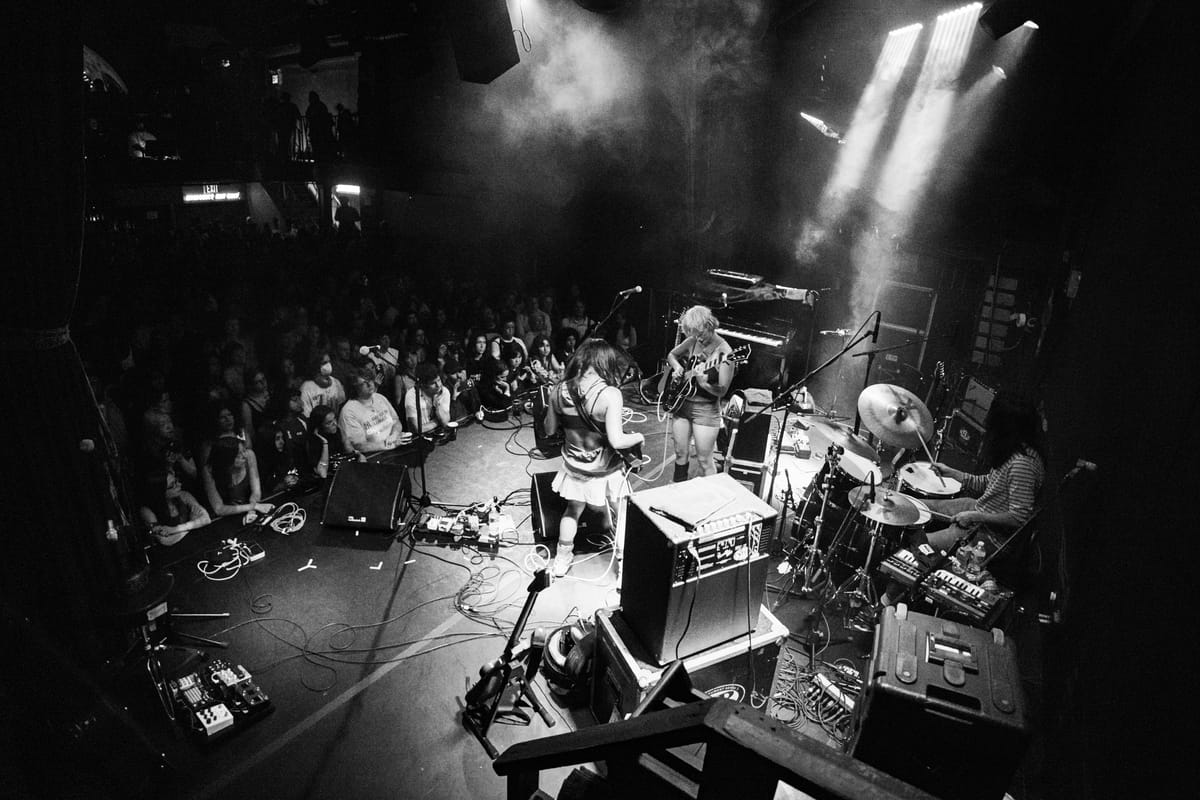
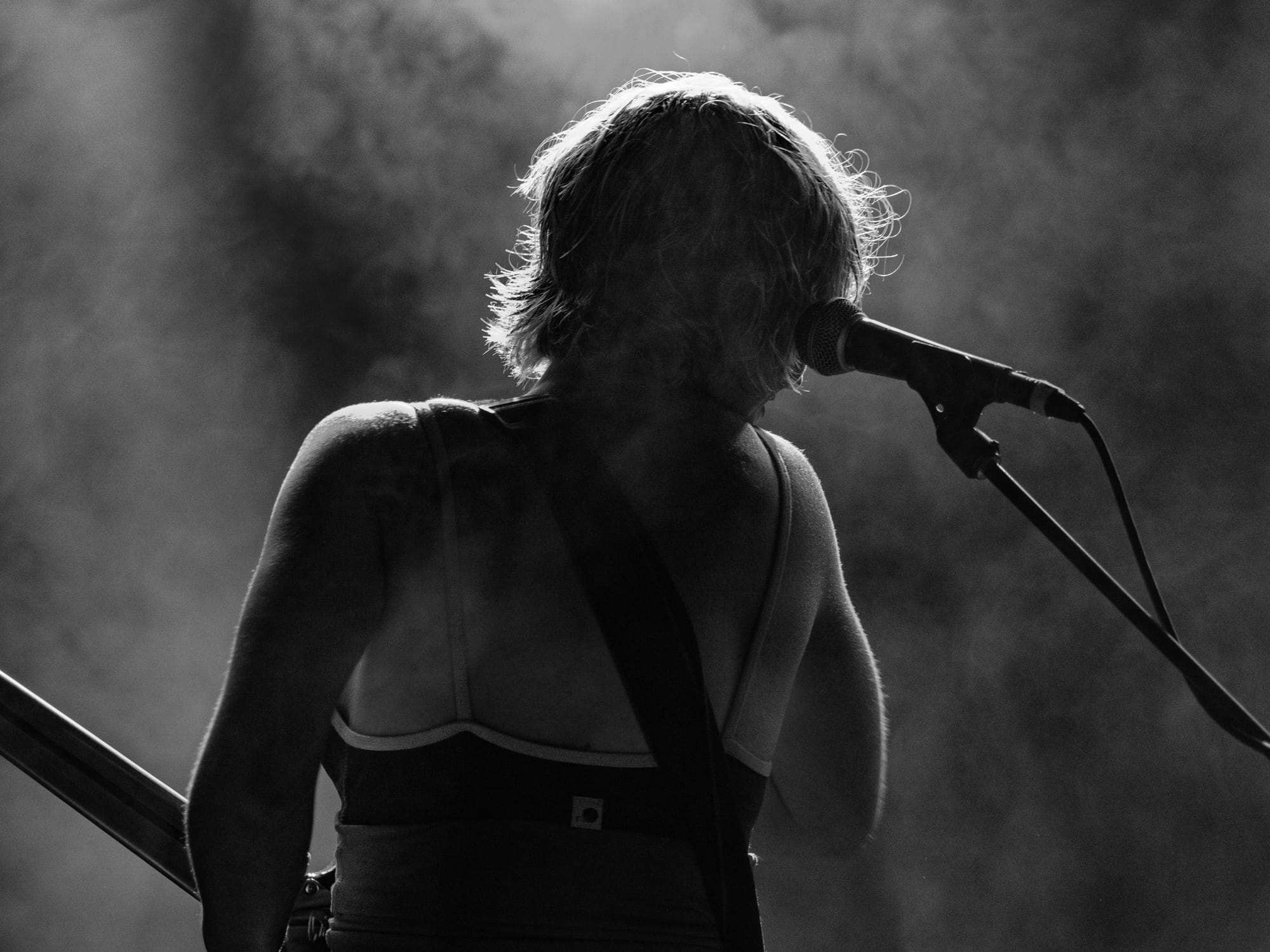
When I saw them play a charity show at New York City’s Bowery Ballroom on May 31, I found their shadowy, intimate set magnificent and sonically rich. They brightened the dark corners of the hall with unreleased material, undeniable chemistry, and singer-songwriter Freeman-Taylor’s tender vocals, projecting into the mic like she’s whispering in an ear. Despite their humble size and sometimes nonsensical improvising, they fostered a strong connection.
Coincidentally, their debut record Role Model Hermit, out today via AMF Records, focuses almost entirely on the idea of connection: of finding it in strange places, with strange things, and at strange times. “It mostly comes from me feeling that humans are very weird,” Freeman-Taylor told The Needle Drop the Tuesday after her band’s show. “We do lots of things that don't really make sense.” Emotions, to her, can’t really be put to words; in order for others to really get what she’s thinking, she needs to put it into metaphor or lyric.
As her most direct verse from “Candelabra,” a single she first wrote in her bedroom at 17 years old, plainly goes: “I want you to know me through my songs / they’re so much cleaner than anything I could say.”
For the London trio, it took a long time for them to sprout with recorded material. Their May 31 show offered a glimpse into their early days as a band, where they formed a solid list of written songs in the early 2020s just after constantly gigging in grassroots venues around the city, according to Addison. “The [Brixton] Windmill in particular was this place where we played lots of our early shows,” he added.
“Because of what other bands have done and gone on to do, it became a really important showcase venue for us. It was through playing there that we met our managers and got label support, which couldn't have happened without the booker letting us play twice a week, rehearse, and hang out there.”
It is true that mary in the junkyard, especially with the strings-heavy and punk rock-ish flavor of Role Model Hermit, are a seemingly perfect new addition to the “Windmill Scene,” easily folding into the same experimental folk vocabulary used by Black Country, New Road, The Orchestra (For Now), My New Band Believe, Ninush, and others. They self-described themselves as “angry, weepy chaos rock” before, favoring a sound that’s high in contrast, rich in metaphor, and sometimes winding in length.
But, contrasting the five-, six-, and seven-piece post-punk bands to their right and left, this trio stood out as a starkly minimal crew. “We’re always stretching a bit beyond our means,” said Barbaglia. “We're trying to do a lot of stuff to create a big enough sound with just the three of us.”
"We definitely make it hard for ourselves," Addison chimed in. Aside from changing the setlist almost constantly, adding and removing songs at a whim just to keep their rhythm just out of step, they use the live space to adapt their moody, grungey, orchestral tracks. "Saya has this mad setup that we haven't fully integrated yet, but in she's got a bass connected to basically organ pedals we called The Big Step. It's so that she can play viola with her hands and the bass lines with her foot at the same time."
While the concept of that makes Freeman-Taylor shiver — "It freaks me out!" she admitted, writhing at the vision of her bandmate toeing the bass — it does showcase how limitless the band feel when they play on stage. Sure, Barbaglia might pass the bass to her guitarist to pick up the violin on the simmering, ready-to-fight "New Muscles," or she might crouch down repeatedly to tune the floor pedal to get the perfect, icy reverb on the ascendant Role Model Hermit finale "Mouse," but the scrappy, make-do energy allows them to avoid boredom. "Having that danger is an important part of our sound as well," clarifies Freeman-Taylor. "Even though it's sometimes stressful, having a bit of uncertainty makes it feel more raw."
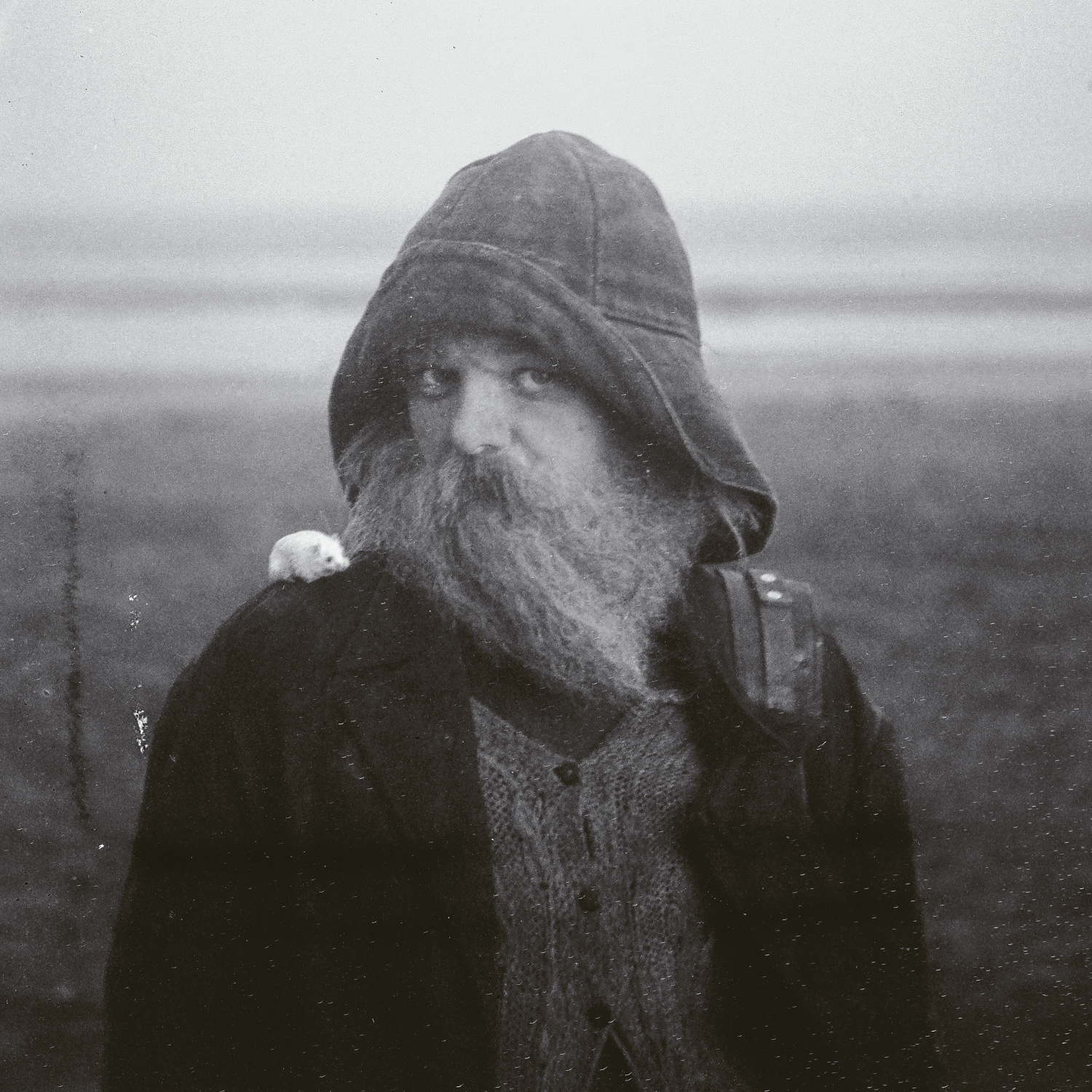
But if the actual song-making process sounds like a maze of guitar necks, drum pieces, synth boards, and stringed instruments scattered across the floor — a sea of vibrating objects to get lost in — then the lyrics that come from Freeman-Taylor's imagination transform Role Model Hermit into the labyrinth of an inner world of a recluse.
Role Model Hermit is about the paradoxes of living in a metropolis like London. Always stirring, stacking people on top of each other, doing something, the city burns with fiery energy. Yet, as the silhouettes of people flash past, one can feel incredibly anonymous, ignored, alone. Throughout the record, Freeman-Taylor conjures up images of "past lives" — though she said she rattled off only a few examples, she recalled writing from the point of view a mother who has a complicated relationship with her daughter, an old sailor, a circus seal, and a dog and its owner — to romanticize the ordinary. She channels party-induced social anxiety by providing a vision of herself cradled like a baby ("Seek And Destroy"); she goes to the gym to manifest transforming into a butterfly ("New Muscles"); she copes with the loneliness of walking home quietly by finding disembodied eyes in the bushes ("Welcome Break").
The lyrics verge on the surreal, but they burrow themselves in the listener's skull and bloom. Even while buried under an out-there metaphor, the colorful feelings of grief, joy, frustration, and companionship still shine through.
"Within songs, I feel like the harmony and the balance of what actually becomes the song are more nonverbal," Freeman-Taylor explained. "By tuning into that, you can learn so much from things that are not obvious."
The band devoted much of the songwriting (and world-building) of Role Model Hermit to hand-selecting sounds that felt both earthly and alien. They experimented with the harmonium, a portable keyboard similar to a pump organ, to give some of the tracks a subtle rasp — little woody pulsations that force the body to press against the ground and itself to simulate a circular, big breath.
Their producer Oli Bayston would filter stems through a ring modulator and extract "signals" from them, adding little beeps and warbles to the songs to inject a sense of urgency and edge. Barbaglia noted she looks for "the contrast between a really raw and almost ancient string sound with a very electronic string sound." As pedal master of the band, she finds the glitch of the pedal the extra step to "curling up a warm, natural sound and taking it somewhere else entirely."
"I think moments like that important when the lyrics have some indescribable, indecipherable stuff in there," the lyricist added.
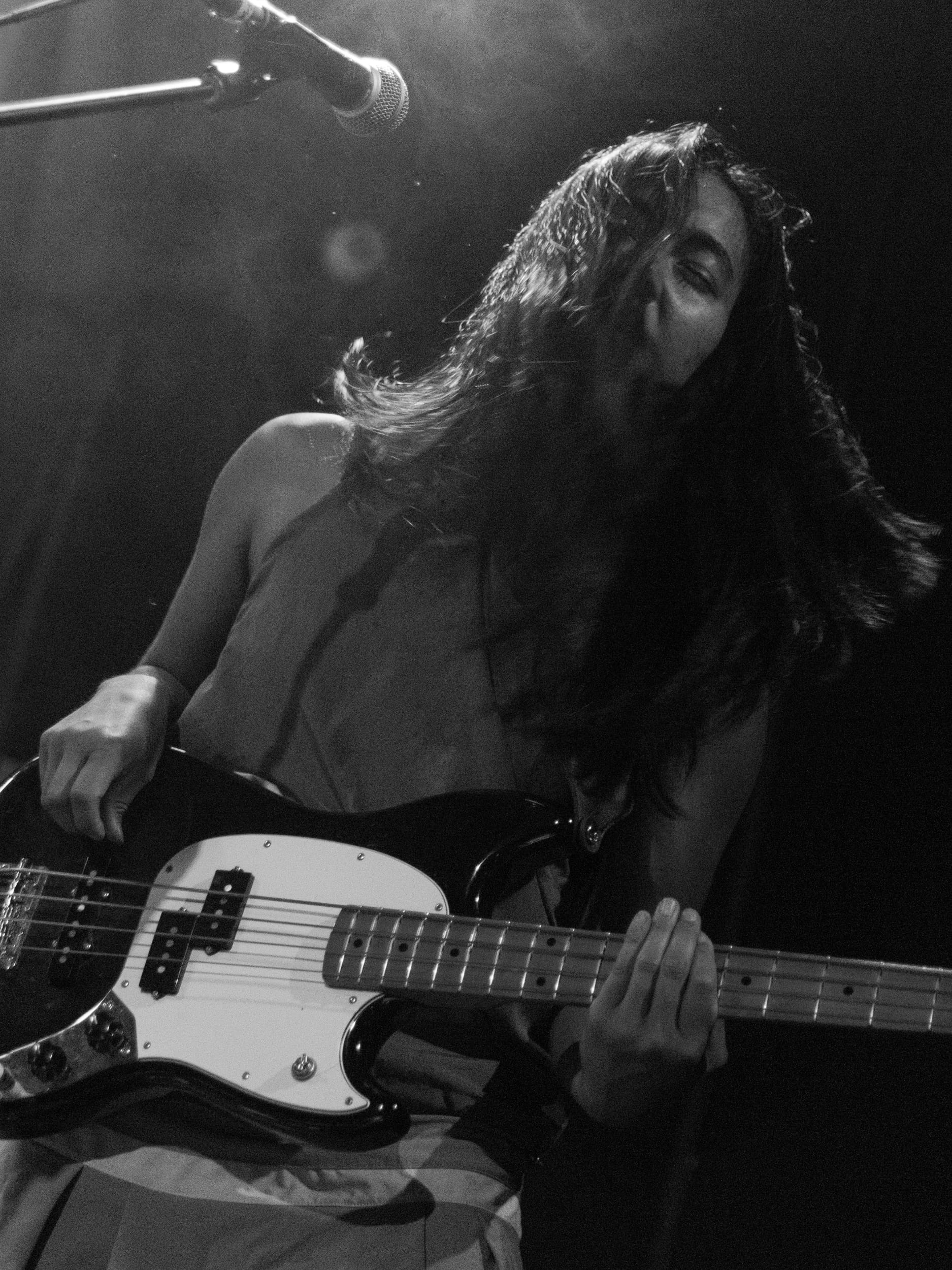
There's a tension in songwriting, the band later described. One can't help but expose themselves once they release music. Though writers like Freeman-Taylor might hole herself up in an old house to pen some lyrics — living on a diet of tinned fish and dreaming of a high school trip to Iceland to slip into the mind of her reclusive sailor — she knows it'll eventually land in the hands of someone else. Music, to her, is "connection by example." The title Role Model Hermit, then, is more so a reminder than a character.
"It's important to have both connection with yourself and with others," she said. "Writing is all about yourself, so that's hermit. But the act of sharing lets you become a part of the world. Releasing becomes the role model."
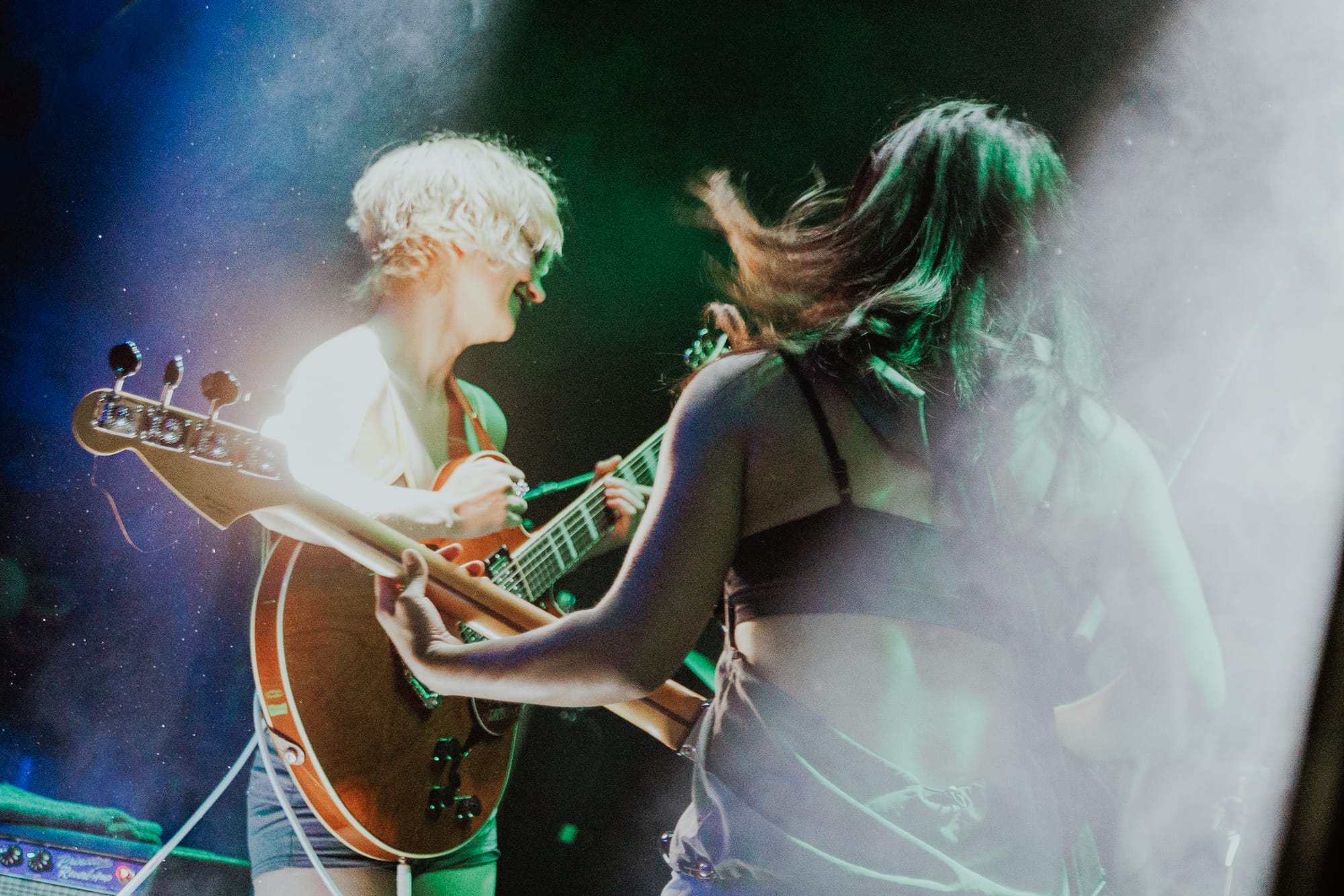
'Role Model Hermit' is out today via AMF Records. The band are going on a tour in the UK, Europe, and the US to support the new album. Tickets are available now.
The Needle Drop may earn an affiliate commission via purchases on ticket links through this article.

What do you think?
Show comments / Leave a comment